


Virtual Reality Enters the Operating Room: UK Surgeons Use VR Goggles in Historic Spine Operation
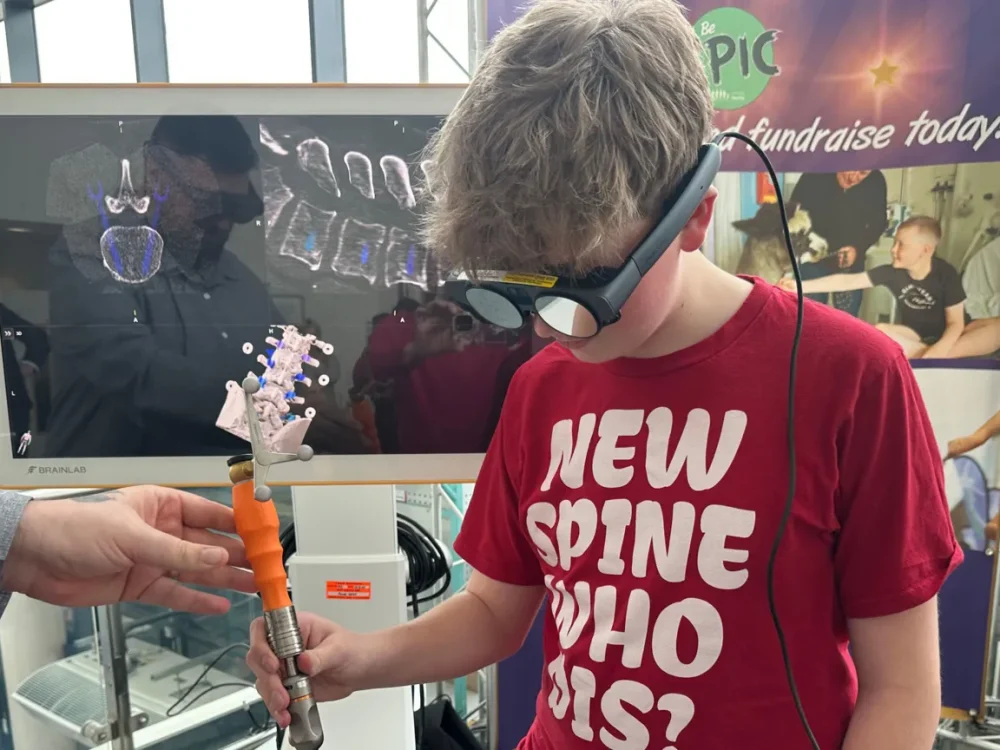
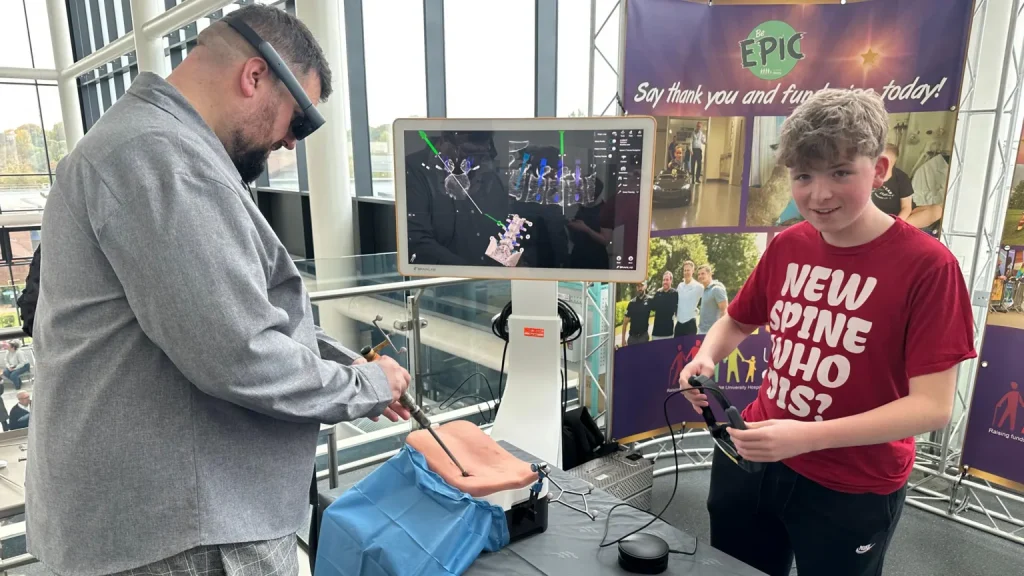
In a major milestone for medical innovation, surgeons at Royal Stoke University Hospital have become the first in England to use virtual reality (VR) goggles during spinal surgery — allowing doctors to see 3D patient scans and live visuals directly inside a headset while operating, informs the BBC News.
The groundbreaking procedure was performed on 14-year-old Dylan, who suffered from scoliosis so severe that his curved spine was compressing one of his lungs. One year later, the operation not only relieved the condition — it literally made him four inches taller.
“I don’t need to look down at the patient and then up at a screen. It’s all in front of you while you work,”
said spine surgeon Vinay Jasani, explaining how the VR headset overlays real-time internal imagery with a 3D model of the patient’s spine.
🧠 Why VR Is a Game-Changer for Surgery
Traditional spinal surgery requires constant switching between the operating field and external screens showing scans. With VR, the data comes to the surgeon instead of the surgeon going to the data.
According to the University Hospitals of North Midlands NHS Trust, more than 600 spinal patients are expected to benefit from this technology, which was funded by the Denise Coates Foundation.
🧍The Human Story Behind the Tech
Before the surgery, Dylan struggled with pain, shortness of breath, and was forced to quit sports and activities.
Now? “He towers over me,” said his mum Mandy. “He’s a superstar.”
Dylan himself summed it up in one sentence: “It’s just mind-blowing.”
🌍 VR in Healthcare Is Growing Fast
This is not an isolated experiment. Around the world, VR is being used for:
- Surgical planning & rehearsals
- Medical student training
- Post-operative physical therapy
- Remote robotic surgery (in development)
Even Meta recently partnered with medical institutions to explore mixed reality in clinical training.
As VR enthusiasts, we often focus on gaming, productivity, or virtual worlds. But breakthroughs like this show something much bigger: VR is not just entertainment — it is becoming a life-saving tool.
If VR can straighten a spine, restore mobility,
VRGO