

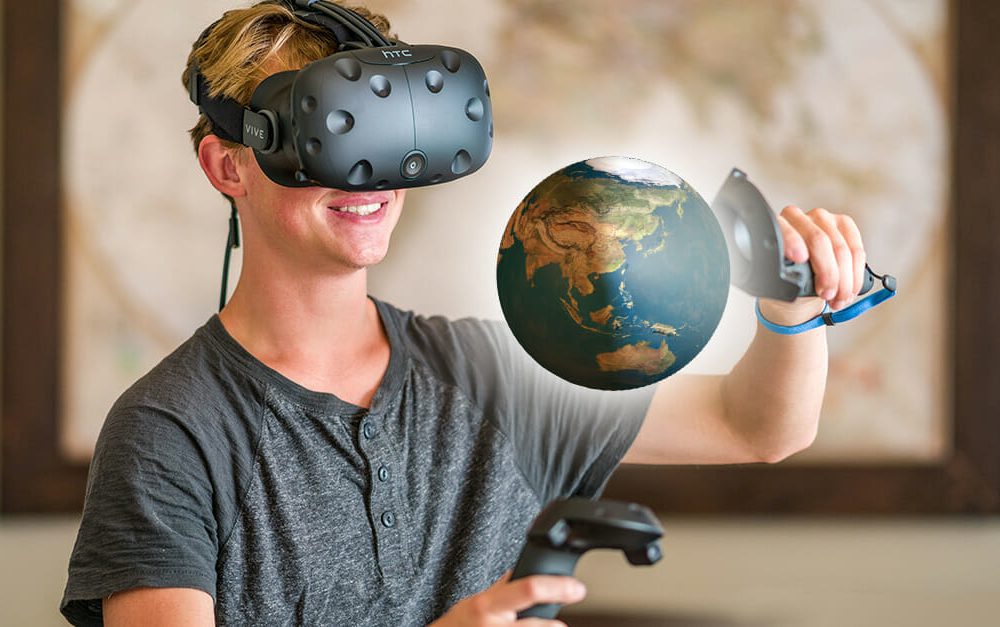
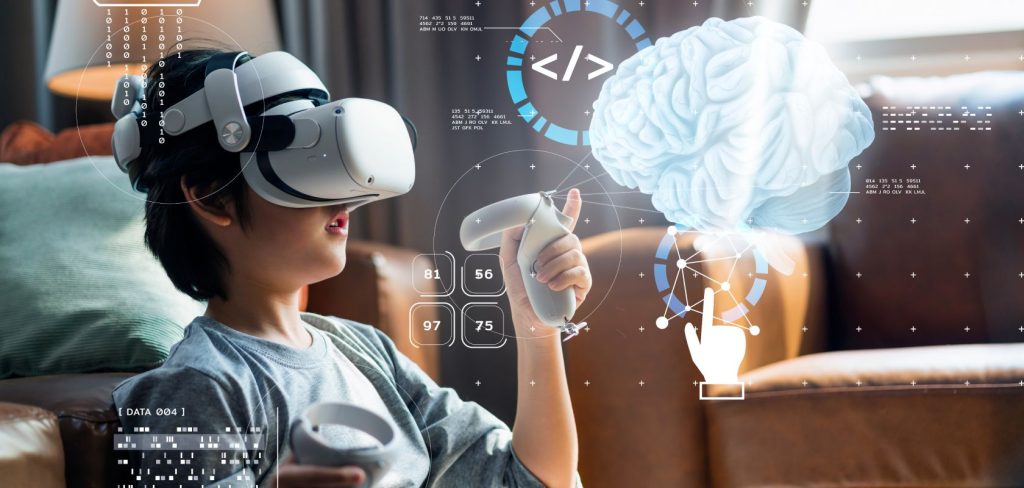
If you thought VR was just for games, strap on your headset – because real life (and real learning) just got a major upgrade. Recently, ASU teamed up with Dreamscape Learn to launch a mobile VR classroom across several Phoenix-area schools. These immersive learning pods – think roller-trailer converted into a high-tech lab – are now offering middle schoolers a chance to experience biology through virtual reality rather than textbooks, informs ASU News.
In one moment, a student might sit in a classroom. In the next, wearing a headset, they’re floating among alien-style fauna, studying cell signaling, genetics, or adaptation – as if they were walking through a living ecosystem. For many kids, this isn’t just more fun. It’s a completely different way to learn.
🌱 Why This Matters (and Why VR GO Gets Excited)
At VR GO, we’ve always believed VR’s real strength isn’t just in entertainment – but in transformation. Education, creativity, exploration, empathy. ASU’s move shows that VR’s potential isn’t hypothetical anymore. It’s real.
Traditional learning has limits: textbooks are flat, diagrams static, experiments often unsafe or impossible. VR breaks those constraints. Suddenly, a biology lesson can be a virtual safari through an alien jungle. A science lab can let you manipulate ecosystems, examine microscopic lifeforms, or watch geological time compress like a sped-up movie. That kind of immersion – the immersive presence VR is famous for – can turn dry theory into vivid experience (Wikipedia).
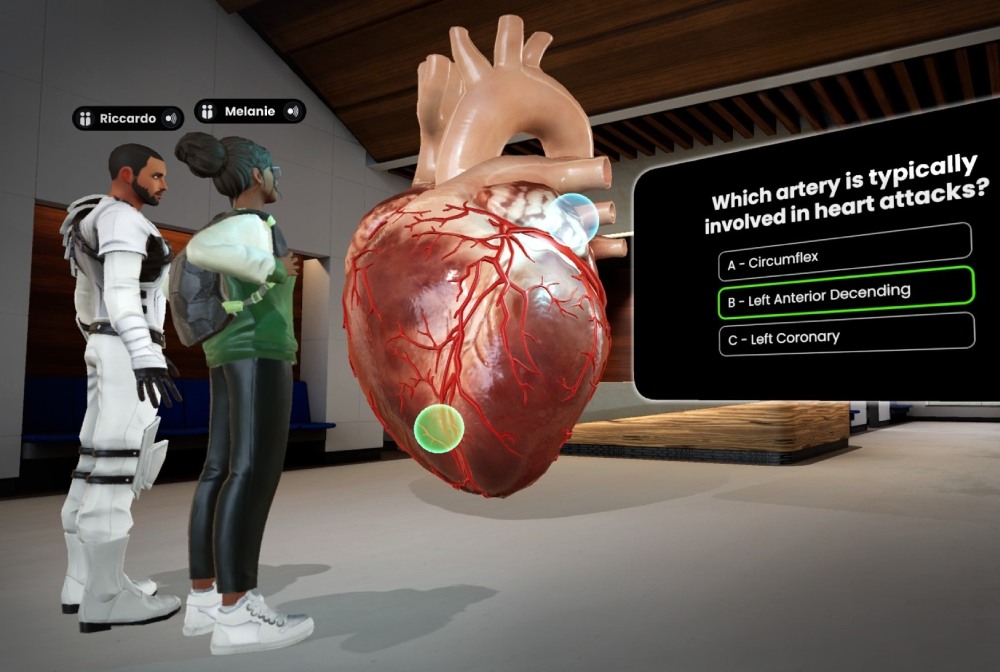
When students say “VR classes made me want to show up,” that’s more than hype – it’s proof that VR can spark genuine interest and engagement. In Phoenix, schools saw attendance rise on days when VR labs were in use, ABC15 Arizona in Phoenix (KNXV).
For VR GO readers – many of whom love VR games, tech, and immersion – this is a signal that VR’s world is expanding. It’s not just about what you play. It’s about what you learn, discover, understand. That means bigger audiences, new use-cases, and more reason for developers to invest in serious VR content → which ultimately fuels growth for the entire VR ecosystem.
If you want to explore how VR tech evolves or see more examples of VR outside gaming, check our VR Tech & Hardware and [VR Sport & Education] (or just our general VR GO blog main page).
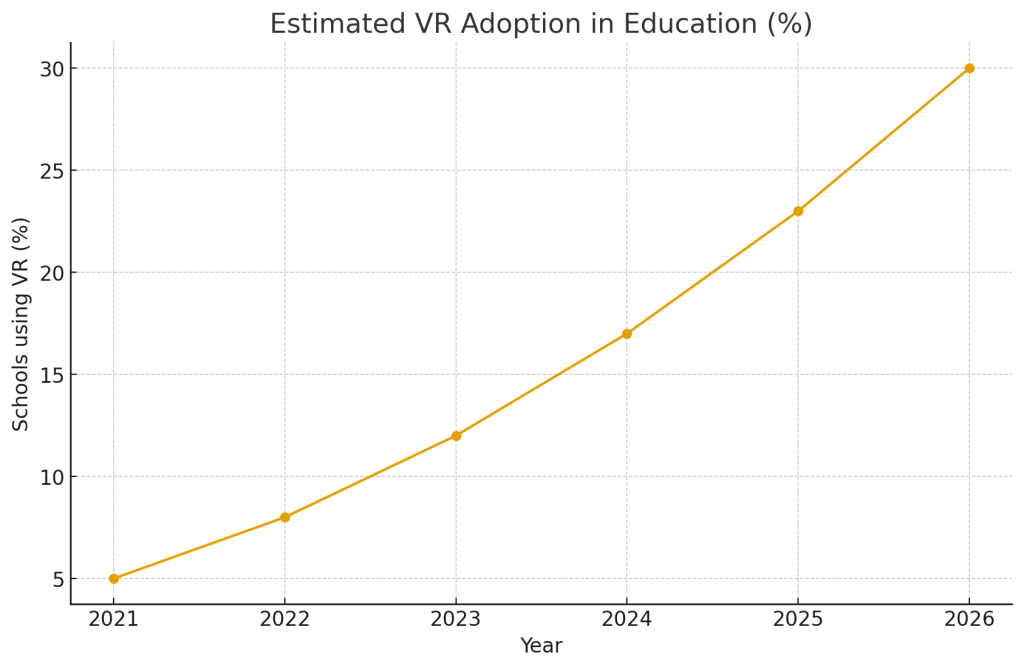
VR Adoption in Schools (% of schools using VR) – 2021–2026
🔬 What the New VR Classroom Looks Like – And What It Feels Like
I like to imagine a kid, call her Maya. She puts on a headset inside a mobile VR pod, flips a switch, and suddenly her desk morphs into a research station on an alien planet. She watches neon-colored creatures roam under unfamiliar suns, studies their biology, tracks how they adapt, and analyses data like a scientist – all while seated safely inside a trailer on Earth.
No dusty textbooks. No tired diagrams. Just presence, wonder, engagement. When she removes the headset, Maya might still be in her hoodie and sneakers – but she carries back a new understanding. A deeper curiosity. A memory that feels more real than any page in a book.
According to her teacher at Villa de Paz Elementary, that’s exactly what’s happening. Students are more engaged, homework gets done, and even attendance improves on VR days. One student said: “Learning biology in a book would have just been boring.” (ASU News).
It’s not magic. It’s VR – making the abstract tangible, the invisible visible, and the mundane spectacular.
📚 Broader Context – Science, Studies, and Why VR Works for Learning
VR as an educational tool isn’t new – but only recently has technology caught up. Over the past few years, research has shown immersive VR learning can significantly improve knowledge retention, help students understand complex systems (like anatomy, physics, ecosystems), and even make learning more accessible.
In one modern study called “Physics Playground,” students who learned via VR labs reported greater satisfaction, deeper engagement, and more confidence compared to traditional slide-based classes – even if the raw “test result gain” was similar, informs arXiv.
Another advantage: VR removes many physical and geographic barriers. Students who might never travel to rainforests, oceans, or space can now explore ecosystems, planets, historical cities – all from a classroom, or a mobile pod, says Wikipedia.
🌟 What This Means for the Future of VR & for Us
ASU’s mobile VR classroom is a small revolution – but it hints at a big one. Imagine a future where every school has VR labs. Where history, biology, physics, geography – all come alive. Where learning feels like exploration, not obligation.
For VR, this matters. It means:
- More everyday exposure to VR (not just for gamers).
- Wider acceptance of VR in education, training, even everyday life.
- New opportunities for VR content creators – educational apps, immersive textbooks, training simulations.
- A broader social foundation for VR tech – beyond gaming, into culture, science, learning, creativity.
If we’re right, in a few years people won’t ask “Why VR?” – they’ll ask “Which headset do I use for school today?”.
VRGO